
Creating a home office that feels both cosy and inviting is essential for anyone who spends a significant amount of time working at home. A comfortable space doesn’t just look good; it can help improve your mood, reduce stress, and increase your productivity. Whether you have a dedicated room or a small corner to work with, these tips will help you design a home office that you will love to spend time in.
1. Choose the Right Location
The first step in creating a comfortable home office is deciding where it will be. Ideally, the space should be quiet and away from high-traffic areas. Natural light is a bonus, so consider positioning your desk near a window. If natural light is limited, you can use warm artificial lighting to maintain a welcoming atmosphere.
2. Invest in Comfortable Seating
Comfortable seating is crucial. Choose an ergonomic chair that supports your posture to prevent aches and pains during long work hours. If space allows, consider adding a small armchair or a soft cushion on a bench for moments when you want to take a break or read.
3. Use Warm and Soothing Colours
Colour can dramatically affect the mood of a space. For a cosy home office, opt for warm, neutral tones such as soft beige, warm greys, or muted greens and blues. These colours help create a calm environment conducive to focus without feeling sterile or clinical.
4. Lighting: Layered and Adjustable
Good lighting is more than just overhead bulbs. Use a combination of ambient, task, and accent lighting to create a balanced look. A warm desk lamp provides focused light for work tasks, while fairy lights or a small floor lamp can add a gentle glow in the background, making the space feel inviting.
5. Add Personal Touches
Personalising your office makes it a more pleasant place to be. Photos, favourite artwork, or inspiring quotes can help boost your motivation and give your workspace character. Just be careful not to overcrowd the space, which can become distracting.
6. Incorporate Natural Elements
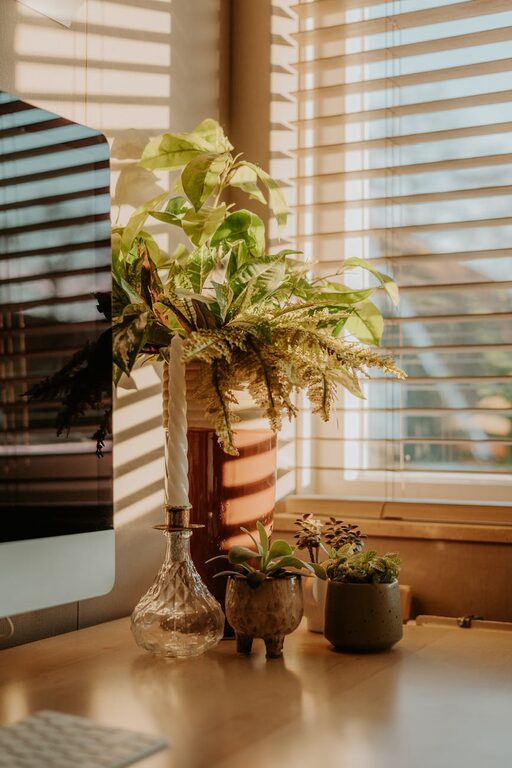
Bringing nature indoors can make a room feel more alive and restful. Adding a few houseplants, whether small succulents or larger leafy plants, improves air quality and adds a touch of green that is easy on the eyes. Even a vase of fresh flowers can brighten the room and lift your spirits.
7. Keep It Organised
A tidy workspace helps keep your mind clear. Invest in smart storage options such as shelves, filing cabinets, or baskets to keep papers and supplies neatly organised. Label boxes or drawers for easy access and consider clear containers for small items like stationery.
8. Invest in Functional Furniture
Choose furniture that fits your needs and space well. A desk with enough surface area for your computer and other essentials is key, but also consider features like built-in drawers or cable management systems to reduce clutter. If space is limited, think about foldaway desks or wall-mounted shelves.
9. Create Zones for Different Activities
If your space allows, try to separate areas for different tasks. For example, a clear and uncluttered desk space for computer work, and a comfy chair or small table for reading or brainstorming. These distinct zones can help you switch focus more easily and keep the space organised.
10. Comfort Items Matter
Consider including soft textiles like rugs, cushions, or throw blankets. These add texture and warmth to your office, making it more inviting and less clinical. They also absorb noise, which can be helpful if your office is in a noisy part of the home.
11. Minimise Distractions
Try to keep your home office free from distractions. This could mean noise-cancelling headphones, a door that closes, or soundproofing elements such as thick curtains or room dividers. A less distracting environment helps maintain your focus and productivity.
12. Make Use of Technology Wisely
While technology is essential for most home offices, keep your gadgets organised and wires hidden where possible. Use stands or holders for your phone and other devices to keep the desk neat. Good-quality webcams or microphones will also improve virtual meetings, making your work day smoother.
Final Thoughts
A cosy and inviting home office blends function with comfort. By carefully selecting your space, colours, lighting, and furniture, and by adding personal and natural touches, you can create a room that feels good to be in and helps you work well. Take your time to design your perfect space and make adjustments as you go—your wellbeing and productivity will thank you!